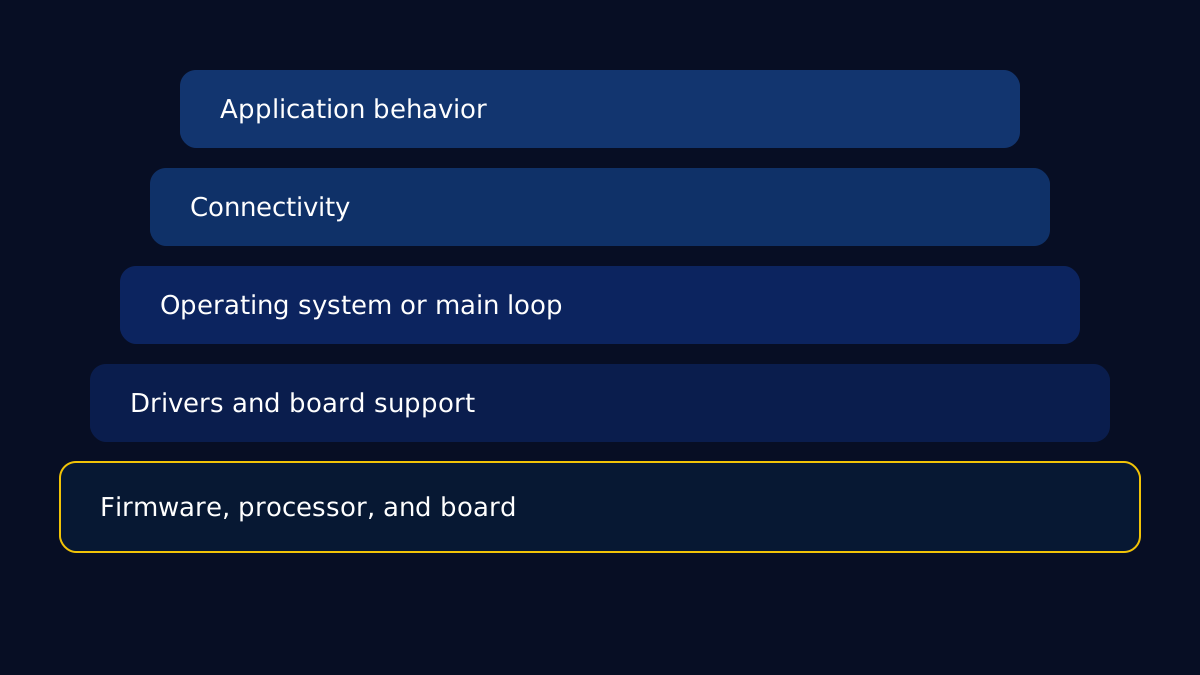
An embedded system is a computer with a specific job. The processor, memory, and interfaces live on a board. Software on that board reads sensors, drives actuators, and talks to other systems. The person using a vehicle, a medical device, a robot, or a factory machine sees the function. They do not see the firmware. MQGen’s services page draws that stack. This note walks the same layers in the order a board comes up.
The board comes up from the bottom
Bring-up starts with power, clocks, reset, and memory. Firmware, usually C or C++, is the first code that runs. A debugger, a serial log, and a scope are normal tools, because a wrong pin looks like a software bug until someone measures it. Device drivers and the board-support package are the contract between that code and the schematic: GPIO, SPI, I2C, UART, Ethernet, or whatever the product actually wired.
Above that contract, the product may run a real-time operating system, embedded Linux, or a single loop with nothing underneath it. The choice follows the deadline and the software load, not a preference for a brand of kernel. Connectivity sits on top of a working driver. CAN, Ethernet, USB, and a radio are product behavior, not a separate industry.
Proof sits beside the stack
Hardware-in-the-loop testing presents signals the controller treats as real. System validation checks the product requirement, not only a unit test on a host machine. Automated tests rerun the same bench case after a change. A passing simulation is not a brought-up board. Teams that skip the bench discover the gap in the vehicle, the robot, or the instrument.
The same stack, different risk
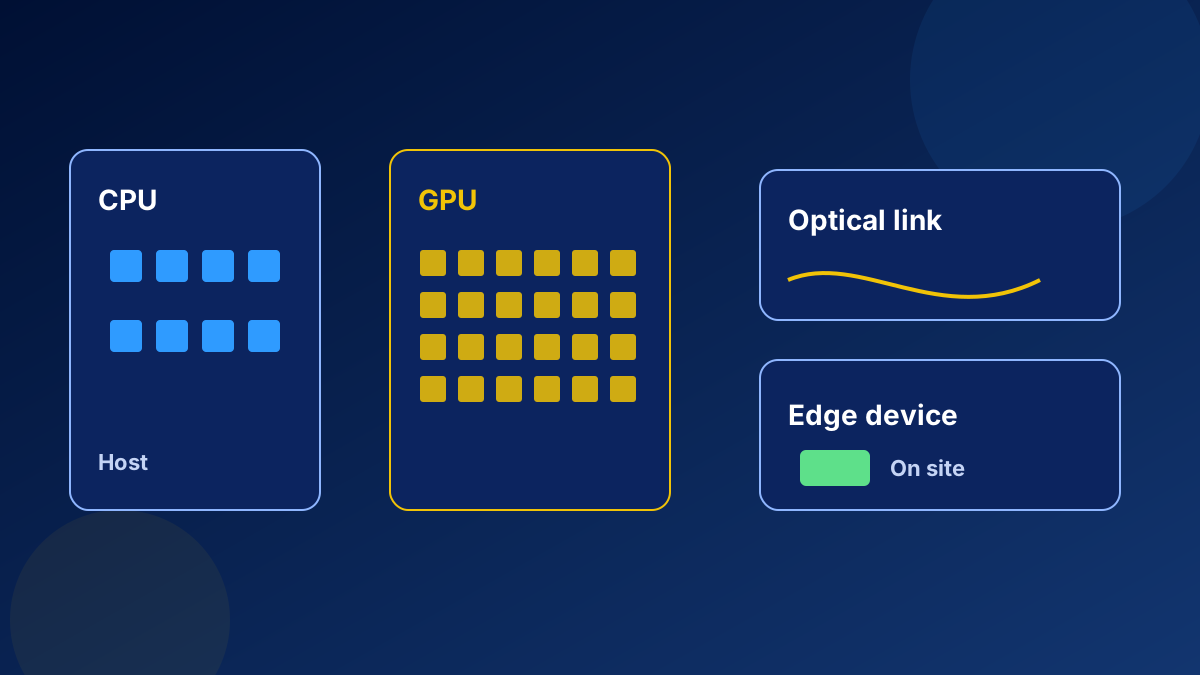
Edge devices decide locally, on a power and latency budget a data center does not have. Robotics and industrial controllers close a loop on time. Automotive electronics and medical devices add safety and a defined response to a fault. A connected product adds an update path and a failure mode that has to be boring. The languages overlap. The evidence that matters is the board the person has brought up and the failure they have chased on it.
For the industry context around those products, including which figures are estimates and which are forecasts, see the trends section on the services page.