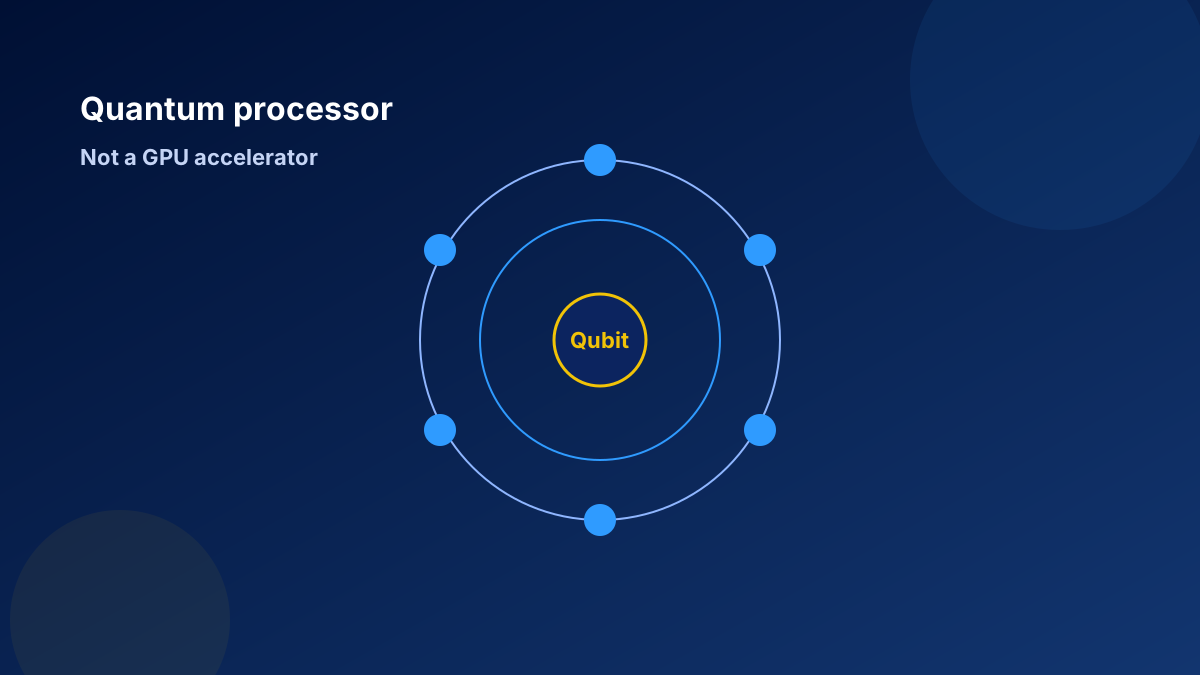
Quantum computing is a real research and engineering program. It is not a near-term replacement for the servers that run enterprise applications. IBM describes the field as still in development. The practical interest is in problems that map onto quantum mechanics, especially simulation of physical systems such as chemistry and materials, and in algorithms that use superposition, entanglement, and interference. A qubit is not a faster bit. Measurement collapses a superposition to a classical result, and decoherence destroys the state the algorithm needs. IBM also notes that interesting speed-ups apply to certain problems, particularly when quantum processors are used together with classical supercomputers. IBM
Demonstrated versus prospective
Access to cloud-hosted quantum hardware, and published experiments, are demonstrated capabilities. A general claim that quantum computers will run a company’s planning, pricing, or machine-learning stack is prospective. It should stay off the production architecture. The longer briefing on all seven computing frontiers is in Next-Generation Computing. This article stays with the decision an enterprise can make now.
The decision available now
NIST’s post-quantum project says machines that could break many current public-key systems may be years or decades away, and that migration should start anyway. Three initial standards were released in August 2024: FIPS 203 (ML-KEM), FIPS 204 (ML-DSA), and FIPS 205 (SLH-DSA). NIST has said it will remove quantum-vulnerable algorithms from its standards by 2035, with high-risk systems moving earlier. The work is an inventory: where key establishment and signatures are used, in which protocols, and which products can be updated. That program does not require operating a quantum computer. NIST PQC
Market-size forecasts for quantum computing are forecasts. They are not a capacity plan. Hardware footprints, cryogenics, and error rates remain reasons these machines are specialized instruments rather than general servers.